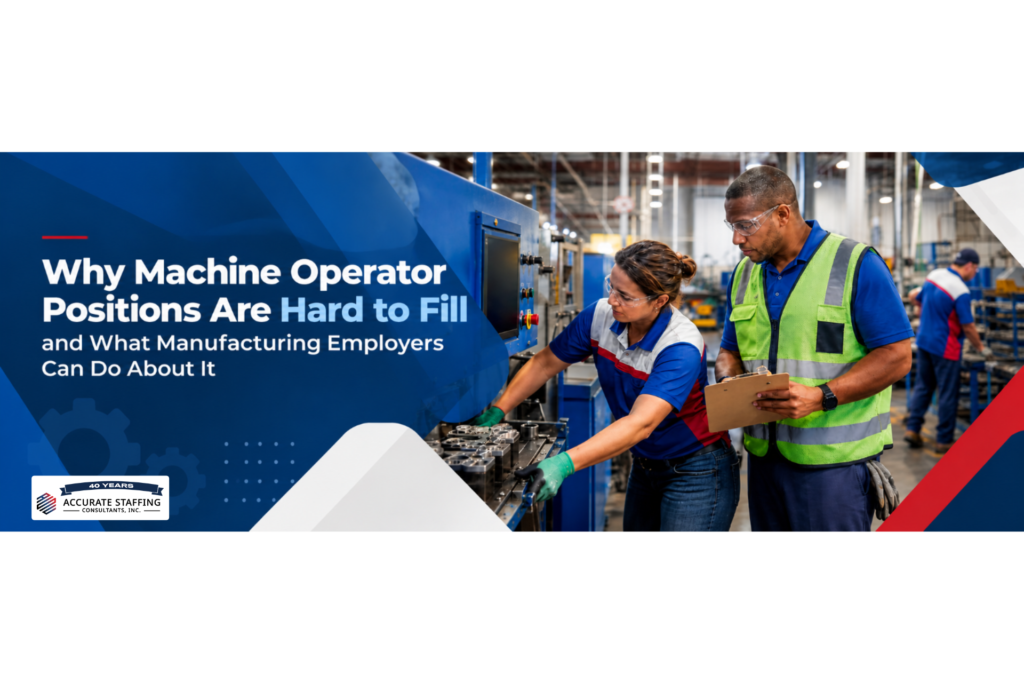
Why Manufacturing Plants Struggle to Fill Machine Operator Roles and How to Fix It
Finding dependable machine operators can be frustrating, especially when production schedules are full and every open position puts additional pressure on your team. For manufacturing employers across North Carolina, South Carolina, and Georgia, hiring the right machine operators isn’t always as simple as posting a job and waiting for applications.
Sometimes, the challenge isn’t a lack of interested candidates. It’s finding people with the right combination of mechanical skills, experience, reliability, and willingness to learn. Other times, the hiring process itself makes it harder to connect with qualified machine operators before they accept another opportunity.
The good news is that a few practical changes can make a real difference. From writing clearer job descriptions to recognizing transferable skills and improving onboarding, manufacturing employers have several ways to attract stronger candidates and keep production moving.
Find Qualified Machine Operators
Why Are Machine Operator Positions So Difficult to Fill?
Machine operators are essential to manufacturing operations, but not every machine operator position requires the same skills.
A candidate who has experience operating packaging equipment may not be familiar with CNC machinery, injection molding systems, or specialized production equipment. Even within the same facility, different machines can require different levels of technical knowledge, quality control, and hands-on training.
This creates a challenge for employers. You need someone who can perform the job safely and accurately, but finding a candidate who meets every requirement can take time.
One common mistake is expecting applicants to have experience with every machine or process listed in the job description. While some positions genuinely require specialized knowledge, others can be filled by candidates who have strong mechanical aptitude, previous manufacturing experience, and the ability to learn new equipment.
For employers, the key is understanding which qualifications are essential from day one and which skills can be developed through training.
Common Hiring Mistakes That Make Machine Operator Positions Harder to Fill
When a machine operator position stays open longer than expected, it’s worth reviewing the hiring process before assuming qualified workers aren’t available.
Sometimes, small details in a job posting or interview process can discourage candidates who might otherwise be a good fit.
1. Job Descriptions That Don’t Explain the Actual Work
A job posting that simply asks for an “experienced machine operator” doesn’t tell applicants much about what they’ll be doing.
Candidates want to understand the equipment they’ll operate, the shift schedule, physical requirements, and expectations of the position.
For example, a machine operator working on a packaging line may have very different responsibilities from someone operating precision cutting equipment.
Providing those details helps candidates determine whether their experience matches the opportunity and gives employers a better chance of attracting relevant applicants.
2. Requiring More Experience Than the Position Actually Needs
It’s understandable to want someone who can contribute immediately, especially when production deadlines are approaching.
However, requiring several years of experience with a specific machine can unnecessarily limit your candidate pool.
Some applicants may have worked with similar equipment or developed valuable skills in assembly, packaging, material handling, or other manufacturing environments.
Instead of focusing only on years of experience, consider whether a candidate understands production processes, follows safety procedures, pays attention to quality standards, and demonstrates a willingness to learn.
3. Taking Too Long to Contact Qualified Candidates
Manufacturing employers often compete for candidates with similar technical backgrounds.
When several companies are hiring for comparable positions, a slow recruitment process can mean losing a promising applicant.
Waiting too long to schedule interviews, provide feedback, or communicate next steps may encourage candidates to pursue other opportunities.
A more organized hiring process helps employers respond quickly without sacrificing the quality of their decisions.
4. Overlooking Candidates With Transferable Skills
Not every qualified machine operator has held that exact job title.
Someone with experience in warehouse operations, production assembly, packaging, or equipment handling may already understand workplace safety, production schedules, quality checks, and the importance of following established procedures.
These skills can provide a strong foundation for learning machine operation.
Looking beyond job titles allows employers to consider candidates who may not meet every preferred qualification but have the potential to become dependable members of the production team.
How Manufacturing Employers Can Find Qualified Machine Operators
Improving your machine operator hiring process doesn’t necessarily require major changes. Often, the most effective approach is to focus on what the job truly requires and make it easier for qualified candidates to move through the recruitment process.
Here are several strategies worth considering.
Start With a Clear Understanding of the Position
Before publishing a job opening, speak with the production supervisor or team leader responsible for the position.
Find out which machines the new employee will operate, what a typical shift looks like, and which tasks require previous experience.
You should also identify physical requirements, safety expectations, and any technical knowledge the candidate needs before starting.
When these details are clear, recruiters can screen applicants more effectively, and candidates have a better understanding of the opportunity.
Separate Essential Skills From Skills That Can Be Taught
Some machine operator positions require specialized training or technical experience. Others offer opportunities for candidates to learn through supervised, hands-on instruction.
The important thing is knowing the difference.
For example, understanding basic measurements, following written instructions, recognizing quality issues, and working safely around equipment may be essential skills for many positions.
Experience with a particular machine model, on the other hand, may be something a capable candidate can develop with the right training.
Being realistic about these requirements can help expand your candidate pool without compromising workplace safety or production standards.
Make the Interview Process More Practical
Traditional interviews can help employers understand a candidate’s work history and communication skills, but they don’t always show how someone approaches hands-on tasks.
Depending on the position, consider including a simple, job-related skills assessment.
This might involve reading a work order, explaining a quality control procedure, identifying basic measurements, or discussing how the candidate would respond to an equipment issue.
These conversations can provide useful insight into a candidate’s technical understanding, attention to detail, and problem-solving abilities.
Communicate Clearly Throughout the Hiring Process
Candidates appreciate knowing what to expect.
Explain the interview process, shift requirements, expected start date, and any additional steps involved in hiring.
When possible, provide timely updates and avoid unnecessary delays between interviews and decisions.
Clear communication helps create a more positive candidate experience and reduces the chance of losing applicants who are considering multiple opportunities.
Hiring Machine Operators in North Carolina, South Carolina, and Georgia
Manufacturing employers across the Carolinas and Georgia often recruit from overlapping talent pools, particularly in communities with a strong presence of production facilities, warehouses, and distribution centers.
For businesses in Charlotte, Raleigh, Conover, Statesville, and surrounding areas, this means finding qualified machine operators may require looking beyond candidates who have worked with identical equipment.
Workers with experience in industrial production, warehouse operations, packaging, or related environments may bring valuable skills that transfer into machine operator positions.
The challenge is identifying which candidates have the technical foundation, work habits, and willingness to learn that your operation requires.
Working with a staffing partner familiar with manufacturing and light industrial hiring can help employers evaluate candidates based on relevant experience rather than job titles alone.
Accurate Staffing supports businesses seeking qualified Machine Operators and other industrial professionals. By understanding the responsibilities and requirements of each opening, our team can help employers identify candidates who align with their workforce needs.
Why Employee Retention Matters Just as Much as Hiring
Finding a qualified machine operator is an important first step, but keeping that employee is equally important.
When new hires leave shortly after starting, employers must repeat the recruiting, interviewing, and training process. That can place additional pressure on supervisors and existing production teams.
In some cases, early turnover happens because employees don’t fully understand what the position involves before accepting it.
A candidate may be comfortable with the equipment but unprepared for the shift schedule, physical demands, production expectations, or pace of the workplace.
Clear communication during hiring can help prevent these surprises.
Once a new operator starts, a structured onboarding process can also make a difference. Introduce employees to their supervisors, explain safety procedures, provide realistic training expectations, and make sure they know where to turn when questions arise.
Regular feedback during the first few weeks gives supervisors an opportunity to identify challenges before they become larger problems.
For manufacturing employers, investing time in onboarding and employee support can help protect the effort already spent finding the right candidate.
How Accurate Staffing Can Support Your Machine Operator Hiring Needs
When production demands are high, finding time to review applications, interview candidates, and coordinate hiring can be difficult.
That’s where working with a staffing agency can provide additional support.
Accurate Staffing helps manufacturing and light industrial employers identify candidates for machine operator and related production positions. Our team works to understand each employer’s requirements, including relevant equipment experience, technical skills, shift schedules, and workplace expectations.
Rather than focusing only on job titles, we consider the experience and qualifications that matter for the position.
Whether you’re looking to fill an immediate opening, add employees during a busy production period, or strengthen your long-term workforce, having a recruiting partner can make the hiring process more manageable.
Employers can also explore our Employer Services to learn more about staffing solutions for changing workforce needs.
Frequently Asked Questions About Hiring Machine Operators
How long does it take to train a machine operator?
-
Training time depends on the equipment, the complexity of the production process, and the candidate’s previous experience. Some machine operator positions involve straightforward tasks that can be learned through supervised, on-the-job training, while others require more extensive technical instruction. Employers should establish clear training expectations and evaluate progress before allowing employees to work independently.
Should employers require previous machine operator experience?
-
Not always. Previous experience may be essential for specialized machinery or positions with advanced technical requirements. However, candidates with backgrounds in manufacturing, assembly, packaging, or related industrial work may have transferable skills that make them suitable for certain machine operator roles. The decision should depend on the equipment, safety requirements, and available training.
What skills should employers look for when hiring machine operators?
-
Important skills often include mechanical aptitude, attention to detail, basic math, the ability to follow instructions, safety awareness, and reliability. Depending on the position, employers may also need candidates who understand quality control procedures, production documentation, equipment adjustments, or technical measurements.
How can manufacturers reduce the time it takes to hire machine operators?
-
Employers can improve hiring efficiency by writing detailed job descriptions, distinguishing required qualifications from preferred skills, responding quickly to applicants, and simplifying interview scheduling. Working with a staffing agency that recruits industrial professionals may also help businesses identify candidates whose experience aligns with their operational needs.
Can a staffing agency help find qualified machine operators?
-
Yes. Staffing agencies can support employers by recruiting candidates, reviewing relevant work experience, and helping identify applicants who meet specific position requirements. For manufacturing companies managing multiple openings or changing production demands, this additional recruiting support can make workforce planning and hiring more manageable.
Need Reliable Machine Operators? Let’s Talk About Your Hiring Needs.
An open machine operator position can affect more than your production schedule. It can increase the workload for existing employees, create challenges for supervisors, and make it harder to keep operations running as planned. Finding the right person starts with understanding the skills your facility needs and connecting with candidates who are prepared to contribute.
At Accurate Staffing, we work with manufacturing and light industrial employers to help make that process easier. Whether you’re hiring for a specific machine, adding support for a busy shift, or planning for future production needs, our team can help you explore staffing options that fit your operation. We support employers throughout North Carolina, South Carolina, and Georgia, with a focus on understanding the people and skills behind every position.
Ready to find the right people for your production team?
Request an Employee and tell us about your machine operator openings, equipment requirements, and hiring goals. You can also explore our Employer Services to learn how Accurate Staffing supports businesses with industrial recruiting and workforce solutions.
Let’s find the people who can help keep your production moving.